How to Keep Daisies Fresh in a Vase: A Grower’s Guide to Longer-Lasting Blooms
Contents:
- Why Daisies Wilt Faster Than You’d Expect
- The Right Way to Cut and Prepare Daisy Stems
- Tools and Technique
- Water Quality, Temperature, and the Chemistry of Freshness
- Flower Food: Worth Using or Marketing Fluff?
- Placement and Environment: Where You Put the Vase Matters
- Daisies vs. Mums: Clearing Up a Common Confusion
- Practical Tips to Extend Vase Life of Daisies
- FAQ: Keeping Daisies Fresh in a Vase
- How long do daisies last in a vase?
- Should I put daisies in warm or cold water?
- Why are my daisies wilting so fast?
- Can I use aspirin or sugar to keep daisies fresh?
- Do daisies need to be refrigerated?
- What to Try Next With Your Daisy Arrangements
Daisies lose up to 30% of their vase life in the first 24 hours after cutting — most of that loss happens before they even reach water. If you’ve ever brought home a cheerful bunch of Shasta daisies or African daisies only to watch them droop by day three, that statistic explains a lot. Keeping daisies fresh in a vase isn’t complicated, but it does require understanding a little of the biology behind what’s happening inside those stems.
Why Daisies Wilt Faster Than You’d Expect
Daisies belong to the family Asteraceae, one of the largest flowering plant families on Earth. What looks like a single flower is actually a composite — a dense central disc of tiny florets (called disc florets) surrounded by the petal-like ray florets you see fanning outward. This composite structure means the “flower” has significantly higher water and nutrient demands than a simple bloom like a tulip.
When a stem is cut, it immediately begins sealing the wound through a process called callose deposition. This natural defense response is useful in the garden, but in a vase it means the stem is actively working against water uptake. Within minutes, an air embolism can form in the cut end, blocking the xylem channels that carry water upward. That’s the biological reason behind the cardinal rule: get cut stems into water fast, and recut them properly before arranging.
Daisy varieties most commonly sold in the US — including Leucanthemum × superbum (Shasta daisy), Gerbera jamesonii (Gerbera daisy), and Bellis perennis (English daisy) — each have slightly different vase lives. Gerberas are the most sensitive, lasting 5–7 days under average conditions. Shastas, when properly cared for, can reach 10–14 days.
The Right Way to Cut and Prepare Daisy Stems
The cutting technique matters more than most hobby growers realize. A straight cut creates a flat surface that can rest flush against the bottom of a vase, effectively sealing it off. Always cut at a 45-degree angle — this increases the surface area exposed to water and keeps the stem from sitting flat.
Tools and Technique
- Use sharp, clean floral shears or a knife. Dull blades crush vascular tissue instead of slicing cleanly through it.
- Cut stems under running water or submerge them in a bowl while cutting. This prevents air from entering the xylem immediately after the cut.
- Remove at least ½ inch from the stem, even if the flowers were just purchased. Stems begin blocking within hours of the original cut.
- Strip all foliage that would sit below the waterline. Submerged leaves decompose rapidly, releasing bacteria that clog stem tissue and cloud the water.
Recut your daisy stems every two days. It takes less than a minute and can add 2–3 days to vase life on its own.
Water Quality, Temperature, and the Chemistry of Freshness
Tap water in most US cities contains chlorine and fluoride — both of which can stress cut flowers at higher concentrations. Letting tap water sit uncovered for 30 minutes before use allows chlorine to off-gas. Alternatively, filtered water works well. The ideal water temperature for daisies is cool, between 50–60°F (10–15°C). Warm water encourages microbial growth and speeds respiration in the flower, burning through its energy reserves faster.
Change the vase water completely every two days. Don’t just top it off. Bacterial populations in standing water double roughly every 20 minutes under warm room conditions, and those bacteria produce enzymes that degrade stem tissue from the inside out.
Flower Food: Worth Using or Marketing Fluff?
Commercial flower preservatives like Floralife contain three active components: a sugar source (usually sucrose) to feed the bloom, an acidifier (often citric acid) to lower water pH and improve uptake, and a biocide (such as 8-hydroxyquinoline citrate) to control bacterial growth. Research published in HortScience has shown that properly diluted flower food can extend vase life by 25–40% compared to plain water.
A DIY alternative that works reasonably well: mix 1 teaspoon of sugar, 1 teaspoon of white vinegar, and ½ teaspoon of bleach per quart of water. It’s not as precisely balanced as commercial preparations, but it addresses all three functional areas.
“Gerbera daisies are especially prone to stem rot at the waterline — I tell my clients to keep only 2–3 inches of water in the vase rather than filling it to the top. Less submerged stem means less surface area for bacterial entry.” — Dr. Mara Ellison, MS Horticulture, certified floral designer and instructor at the Oregon Floral Arts Institute
Placement and Environment: Where You Put the Vase Matters
Direct sunlight might seem like a logical choice for flowers, but it accelerates water loss through the petals and raises the temperature inside the bloom tissue. Place your vase in bright, indirect light — near a north- or east-facing window is ideal in most US homes.
Keep daisies away from fruit bowls. Ripening fruit, especially apples and bananas, emits ethylene gas — a natural plant hormone that triggers accelerated aging and petal drop in cut flowers. Even a banana sitting 3 feet away can measurably reduce vase life.
Nighttime temperature is a genuine variable worth managing. Moving your vase to a cooler room (around 60°F) overnight can extend bloom life noticeably. Professional florists routinely store cut flowers at 34–38°F. You won’t replicate a commercial cooler in your living room, but even a 10-degree drop overnight slows cellular respiration and helps flowers last longer.
Daisies vs. Mums: Clearing Up a Common Confusion
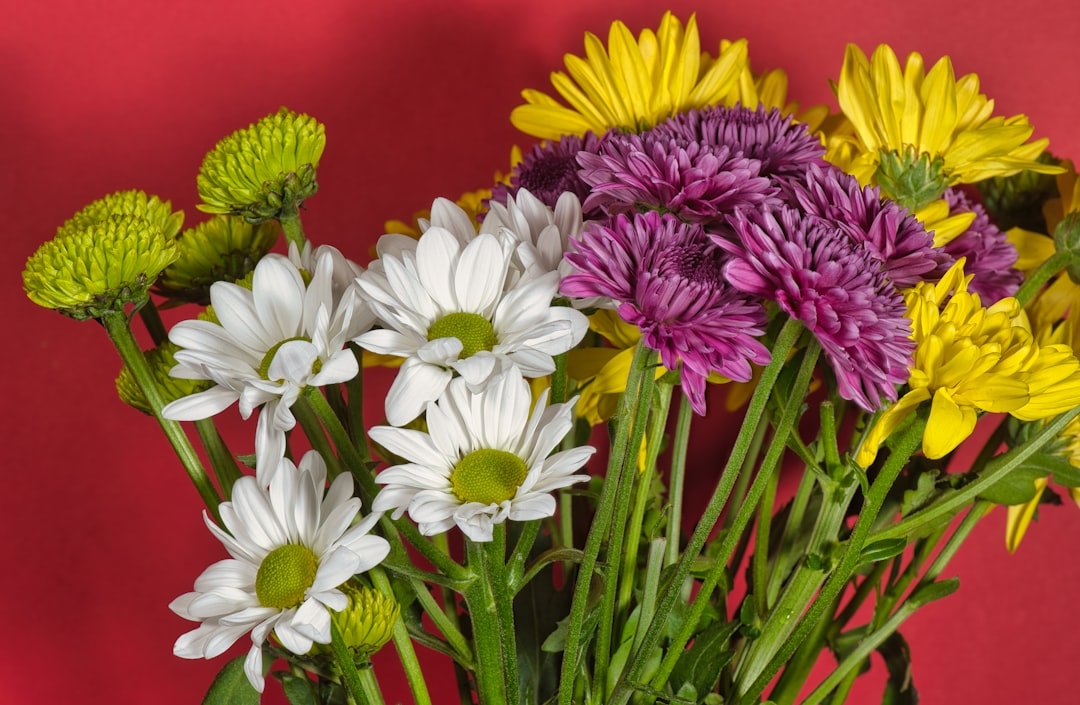
Daisies and chrysanthemums are frequently confused — both belong to Asteraceae and share the composite flower structure. The practical difference for vase care is significant. Chrysanthemums have a much longer natural vase life (14–21 days on average) and tolerate warmer water temperatures better than daisies. They’re also less sensitive to bacterial buildup because their stems are woodier and more resistant to rot.
If you’re buying flowers specifically to last through a two-week vacation window, mums are the more practical choice. For a 5–10 day arrangement where visual freshness and the daisy’s characteristic open face matter, proper daisy care techniques will get you there — but they require more active maintenance than mums do.
Practical Tips to Extend Vase Life of Daisies
- Harvest or purchase daisies when buds are just beginning to open, not fully open. Flowers purchased at full bloom have less time left on the clock.
- Avoid overcrowding. Stems that press tightly together create friction that bruises tissue. Leave room for airflow between stems.
- Keep Gerbera daisies especially shallow in water — no more than 2–3 inches — to prevent hollow stem rot, which is their most common vase failure.
- Mist the petals lightly with cool water once a day if your home is dry. Central heating in US winters can drop indoor humidity below 30%, which desiccates petals quickly.
- Remove spent blooms promptly. Decomposing flowers release ethylene and harbor bacteria that accelerate the decline of the remaining healthy blooms.
FAQ: Keeping Daisies Fresh in a Vase
How long do daisies last in a vase?
With proper care — clean water, regular stem recutting, and cool placement — most daisy varieties last 7–14 days in a vase. Gerbera daisies typically fall at the shorter end (5–7 days), while Shasta daisies can reach 10–14 days under optimal conditions.
Should I put daisies in warm or cold water?
Cool water between 50–60°F is best for daisies. Cold water slows bacterial growth and reduces respiration rates in the bloom, both of which extend vase life. Avoid hot water, which can shock stems and speed up wilting.
Why are my daisies wilting so fast?
Rapid wilting usually points to one of three causes: an air embolism blocking water uptake in the stem (fix by recutting at a 45-degree angle underwater), high bacterial load in the water (fix by changing water daily and using flower food), or ethylene exposure from nearby fruit or other wilting flowers.
Can I use aspirin or sugar to keep daisies fresh?
Aspirin lowers water pH slightly, which can improve water uptake, but the effect is modest compared to commercial flower food. Sugar alone feeds the bloom but can accelerate bacterial growth if no biocide is added. A combination of sugar, white vinegar, and a tiny amount of bleach is a more complete DIY solution.
Do daisies need to be refrigerated?
Refrigeration isn’t necessary but is genuinely beneficial. Moving your vase to a room that stays around 60°F overnight — or even briefly placing daisies in a refrigerator away from produce — slows cellular aging and can add 1–3 days to vase life.
What to Try Next With Your Daisy Arrangements
Once you’ve dialed in the fundamentals — clean cuts, cool water, flower food, and smart placement — consider experimenting with conditioning techniques used by professional florists. Hardening, which involves placing freshly cut stems in a bucket of cool water in a dark, cool room for 6–12 hours before arranging, is standard practice in commercial floristry and can dramatically improve how well daisies hold up after being moved into a display vase. It’s one step that most home gardeners skip entirely, and one that makes a measurable difference from day one.