How to Take Care of a Flower Bouquet You Just Received
Contents:
- Why Fresh Flowers Start Dying Before You Even Get Them
- The First 30 Minutes: Setting Your Bouquet Up for Success
- Unwrap and Assess Immediately
- Trim the Stems Properly
- Strip Leaves Below the Waterline
- Choosing the Right Vase and Water
- Care for a Received Flower Bouquet: Daily Maintenance That Actually Works
- Refresh the Water Every Two Days
- Re-Trim Stems Every Three to Four Days
- Placement: The Hidden Killer
- Flower-Specific Care Tips
- Roses
- Tulips
- Lilies
- Hydrangeas
- How Long Should a Bouquet Last?
- FAQ: Caring for a Received Flower Bouquet
- How often should I change the water in my flower vase?
- Should I use the flower food packet that came with my bouquet?
- Why are my flowers wilting even though I just got them?
- Can I put my flower bouquet in the refrigerator overnight?
- What should I do with flowers that start to die before the rest of the bouquet?
- Make Your Next Bouquet Last Even Longer
Most cut flowers are already thirsty the moment they reach your hands — and what you do in the first 30 minutes determines whether your bouquet lasts four days or fourteen. Proper care for a received flower bouquet is less about having a green thumb and more about understanding a few non-negotiable rules that florists quietly follow every single day.
Why Fresh Flowers Start Dying Before You Even Get Them
Cut flowers are living organisms in a race against time. The moment a stem is severed from the plant, it begins drawing air into its vascular tissue — the same pathways that once delivered water and nutrients from the soil. That air creates a blockage, slowing hydration and accelerating wilting.
Commercial cut flowers often travel 3,000 to 5,000 miles from farms in Colombia, Ecuador, or the Netherlands before landing in a US florist’s cooler. Even a same-day delivery bouquet may have been out of water for several hours. By the time you unwrap it, the stems have already started sealing over. That’s why the first steps you take matter so much.
Ethylene gas compounds the problem. This invisible ripening agent — produced naturally by fruit, car exhaust, and even the flowers themselves — speeds petal drop and browning. A bouquet placed near a fruit bowl can lose two to three days of vase life for no other reason than proximity.
The First 30 Minutes: Setting Your Bouquet Up for Success
Unwrap and Assess Immediately
Don’t leave your bouquet sitting on the counter still bundled in its wrapping. Remove the packaging right away and take a close look at what you have. Check for any blooms that arrived damaged, leaves that look slimy, or stems that appear crushed. These need to be removed before they spread bacterial decay to the healthy flowers around them.
If the bouquet came with a small sachet of flower food — that crystalline powder in a tiny packet — set it aside. You’ll need it in the next step.
Trim the Stems Properly
This single step makes a bigger difference than almost anything else. Using sharp scissors or a floral knife (never dull kitchen shears, which crush the vascular tissue), cut at least one inch off each stem at a 45-degree angle. The angled cut increases the surface area available for water uptake and prevents the stem end from sitting flat against the bottom of the vase, which would block absorption.
Do this while holding the stems under running water or submerged in a basin — the goal is to prevent any new air from entering the cut end before it hits the vase water. For roses especially, this underwater trimming technique can add a full day or two of extra life.
Strip Leaves Below the Waterline
Any foliage that sits below the water surface will rot. That decomposition creates bacteria that clogs stems and clouds the water, cutting off hydration to every flower in the arrangement. Remove all leaves that would fall below the vase’s water level — it takes 60 seconds and it’s one of the highest-impact things you can do.
Choosing the Right Vase and Water
Vase size and water quality are wildly underestimated. A vase that’s too narrow bunches stems together and restricts water flow; one that’s too wide lets top-heavy flowers splay and collapse under their own weight. As a general rule, the vase should be roughly half the height of the bouquet.
Fill it with cool or lukewarm water — not cold and definitely not hot. Room temperature water, around 65–70°F, absorbs most efficiently into cut stems. Add the flower food packet to the water before placing the flowers in. These packets contain three key ingredients: sugar for energy, acidifier to lower the water’s pH and improve uptake, and a biocide to slow bacterial growth. Studies by the Society of American Florists show that flower food can extend vase life by 30 to 50 percent compared to plain water.
If you didn’t receive a flower food packet, mix one teaspoon of sugar, one teaspoon of white vinegar, and a small drop of bleach into one quart of water as a DIY substitute.
Care for a Received Flower Bouquet: Daily Maintenance That Actually Works
Refresh the Water Every Two Days
Bacteria multiply fast in standing water. Within 48 hours, even treated water becomes murky with microbial growth. Pour out the old water completely, rinse the vase with warm soapy water, refill with fresh cool water and a new dose of flower food, and return your bouquet. This alone can add three to five days of vase life over bouquets left in unchanged water.
Re-Trim Stems Every Three to Four Days
Each time you change the water, take another half-inch off each stem. Even if stems look fine, the cut ends seal over with time. Regular re-trimming keeps absorption channels open and hydration consistent across the entire arrangement.
Placement: The Hidden Killer
Where you put your bouquet matters as much as how you treat it. Avoid these locations:
- Sunny windowsills: Direct sunlight raises the temperature of petals and water, accelerating wilting and bacterial growth.
- On top of the refrigerator or near the stove: Both produce heat that desiccates blooms faster.
- Near heating or air conditioning vents: Forced air dries out petals rapidly.
- Next to ripening fruit: Especially bananas, apples, and avocados, which produce high levels of ethylene gas.
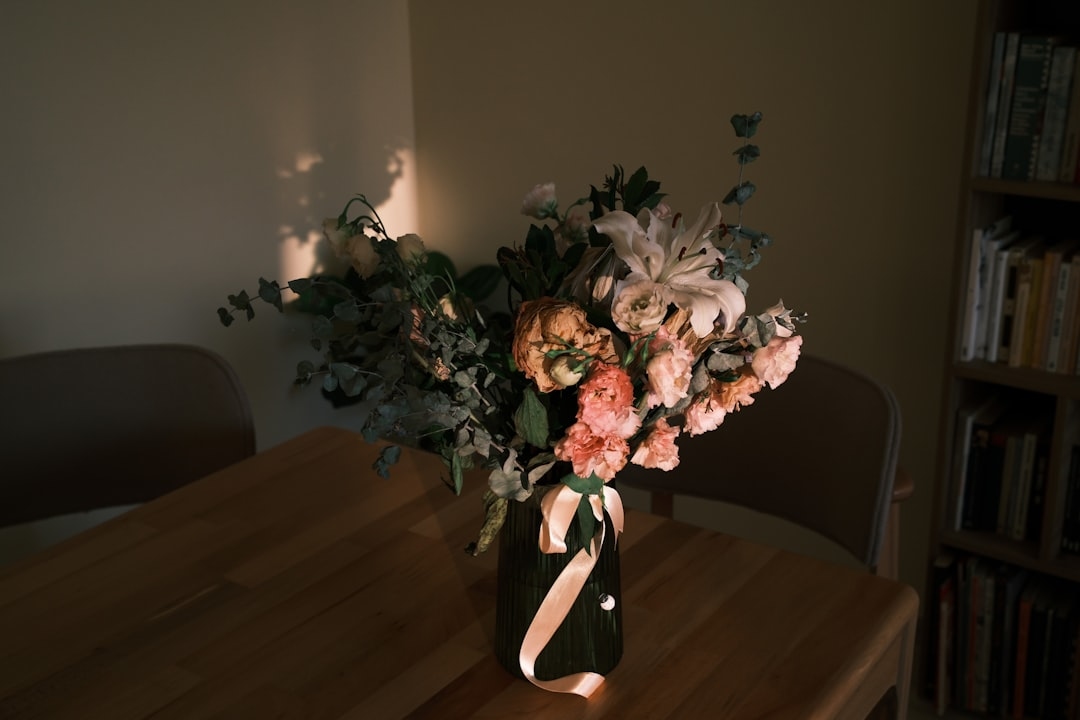
The ideal spot is a cool, well-ventilated room with indirect light — a dining table away from windows, a mantelpiece away from a working fireplace, or a kitchen counter far from the stove.
Flower-Specific Care Tips
Roses
Roses are notoriously prone to “bent neck,” where the head droops even while the stem appears healthy. This is caused by a blockage in the stem near the top. To revive a drooping rose, re-cut the stem, then submerge the entire flower — head and all — in a tub of cool water for 30 to 60 minutes. In many cases, this fully rehydrates the bloom and the head straightens on its own.
Tulips
Tulips keep growing after they’re cut — sometimes an inch or more. They also phototropically bend toward light sources, which can make arrangements look lopsided within a day. Rotate the vase a quarter-turn each morning and keep water levels high, as tulips drink heavily.
Lilies
If your bouquet contains lilies, remove the stamens (the pollen-covered structures at the center of each bloom) as soon as the flowers open. Lily pollen stains fabric, skin, and countertops a deep orange-yellow that is nearly impossible to remove. Use a tissue, not your fingers, to snap the stamens off cleanly.
Hydrangeas
Hydrangeas are moisture-hungry and will wilt dramatically at the slightest hydration lapse. They also absorb water through their petals, not just their stems. Misting the blooms lightly with water once a day helps them stay full and round throughout their vase life.
How Long Should a Bouquet Last?
With proper care, most mixed bouquets last seven to twelve days. Single-variety arrangements often do better: sunflowers typically last six to twelve days; carnations can reach three weeks with attentive care; gerbera daisies average seven to ten days. Roses, with ideal conditions including cool temperatures, fresh water, and regular trimming, can last up to two weeks.
Flowers that arrive already in bloom will have a shorter remaining lifespan than those that arrive in tight bud. A bouquet with mostly closed buds is actually a good sign — it means maximum vase life ahead of you.
FAQ: Caring for a Received Flower Bouquet
How often should I change the water in my flower vase?
Change the water every two days. Bacteria build up quickly in standing water and block stem hydration. Each time you change the water, rinse the vase with soap and re-trim stems by half an inch.
Should I use the flower food packet that came with my bouquet?
Yes, always. Flower food contains sugar, pH-adjusting acid, and a biocide that together extend vase life by 30 to 50 percent. Dissolve the full packet in the water before placing your bouquet in the vase.
Why are my flowers wilting even though I just got them?
The most common cause is stem blockage from air or bacteria. Re-cut the stems at a 45-degree angle, remove submerged leaves, change the water, and move the bouquet away from heat sources. Severely wilted flowers can also be submerged in cool water for up to an hour to rehydrate.
Can I put my flower bouquet in the refrigerator overnight?
Yes — this is one of the best things you can do. Store the bouquet in the refrigerator overnight, away from fruits and vegetables. Keep the temperature above 32°F and make sure the flowers are not directly next to ethylene-producing produce. This significantly slows aging and can add several days to the arrangement’s life.
What should I do with flowers that start to die before the rest of the bouquet?
Remove fading or dead blooms immediately. Dying flowers release ethylene gas, which accelerates decline in surrounding healthy blooms. Removing them also improves the look of the arrangement and allows you to reposition remaining flowers for a fresh presentation.
Make Your Next Bouquet Last Even Longer
Now that you know exactly how to care for a received flower bouquet, the next step is making an informed choice about what you order or request for upcoming occasions. Some flowers are simply hardier than others — if longevity matters, ask your florist for arrangements that lean on carnations, alstroemeria, or chrysanthemums, all of which routinely outlast the more popular but delicate peonies and ranunculus.
If you’re planning an event and want flowers that look stunning for the full duration — from setup through takedown — share this knowledge with your florist. Florists who know their client understands flower care will often give more honest guidance about which varieties and arrangements will hold up best under real-world conditions. That conversation alone can be the difference between flowers that wow your guests at hour one and flowers that still look incredible at hour eight.