How to Keep Orchids Alive Indoors: A Grower’s Real-World Guide
Contents:
- Why Most Orchids Die Indoors (And It’s Not What You Think)
- Choosing the Right Spot: Light Requirements for Indoor Orchids
- Regional Light Differences Across the U.S.
- How to Water Orchids Correctly — The Soak-and-Drain Method
- The Best Potting Mix and When to Repot
- Budget Breakdown: What It Costs to Keep Orchids Properly
- Feeding Orchids: Fertilizer Schedule That Actually Works
- Temperature, Humidity, and Air Circulation
- Getting Orchids to Rebloom Indoors
- Common Problems and How to Fix Them Fast
- Yellow Leaves
- Wrinkled or Shriveled Leaves
- No New Blooms After 12+ Months
- FAQ: Keeping Orchids Alive Indoors
- How often should I water an orchid indoors?
- Can orchids survive in low-light rooms?
- How do I know if I’m overwatering my orchid?
- What’s the best fertilizer for indoor orchids?
- Why won’t my orchid rebloom?
- Your Next Step With Indoor Orchids
Orchids have a reputation for being divas — temperamental, fragile, and destined to die the moment you bring them home. That reputation is almost entirely wrong. The real killer isn’t neglect; it’s too much love. Overwatering, over-fertilizing, and wrong placement wipe out more orchids than any pest or disease ever could. Once you understand what these plants actually want — not what we assume they want — keeping orchids alive indoors becomes genuinely straightforward. This guide gives you the exact routines, measurements, and regional adjustments that turn repeat orchid killers into confident growers.
Water your orchid once every 7–10 days by soaking the roots for 15 minutes, then letting them drain completely. Give it bright, indirect light (an east-facing window is ideal). Feed with a balanced 20-20-20 fertilizer at quarter-strength every other watering. Keep temperatures between 65–80°F during the day. That’s 90% of the job.
Why Most Orchids Die Indoors (And It’s Not What You Think)
The number-one cause of death for indoor orchids — specifically Phalaenopsis, the type sold in virtually every grocery store and garden center — is root rot from sitting in water. The pot comes with a decorative outer sleeve that traps moisture. Most people never remove it. Water collects at the bottom, the roots suffocate, and within a few weeks the plant collapses from the inside out.
The second most common mistake is placing the orchid on a windowsill that gets direct afternoon sun. A south-facing window in July can scorch leaves and dry out roots within days. Understanding these two failure points alone puts you ahead of the majority of orchid owners.
Choosing the Right Spot: Light Requirements for Indoor Orchids
Phalaenopsis orchids need bright, indirect light for 12–14 hours a day. An east-facing window is the classic recommendation because morning sun is gentler and gives way to indirect light by midday. A north-facing window often provides too little light — you’ll get lush leaves but no blooms. South or west-facing windows can work beautifully if you diffuse the light with a sheer curtain.
Regional Light Differences Across the U.S.
Where you live genuinely changes your setup. In the Pacific Northwest (Seattle, Portland), winter light is so weak that growers often supplement with a full-spectrum LED grow light — 12–16 inches above the plant, running 14 hours a day. A basic grow light setup costs $20–$45 and makes a noticeable difference from November through February.
In the Southeast (Florida, Georgia, the Carolinas), the bigger challenge is intense summer light and heat. West-facing windows in Atlanta in August can easily hit 90°F+ near the glass. Use sheer curtains and move plants a foot back from the window during peak summer months. Growers in the Northeast (New York, Boston) often find east-facing windows near-perfect from April through October, with grow light support needed for the four darkest winter months.
How to Water Orchids Correctly — The Soak-and-Drain Method
Forget misting. Forget ice cubes. The most effective watering method for Phalaenopsis is the soak-and-drain approach:
- Remove the orchid from any decorative sleeve or outer pot.
- Place the clear plastic nursery pot in a sink or bucket.
- Run lukewarm water over the roots and bark medium for 15 minutes, or submerge the pot for 10–15 minutes.
- Let the pot drain completely — 20 to 30 minutes — before returning it to its spot.
- Repeat every 7–10 days in summer, every 10–14 days in winter.
The roots tell you everything. Healthy, well-hydrated roots are bright green. Silvery-gray roots mean it’s time to water. Black or mushy roots mean rot — trim those with sterile scissors and repot into fresh bark immediately.
The Best Potting Mix and When to Repot
Orchids should never be planted in regular potting soil. They need chunky, fast-draining bark mix — typically medium-grade fir bark, sometimes blended with perlite or sphagnum moss. A quality orchid bark mix costs $8–$15 for a 4-quart bag, which is enough to repot two or three plants.
Repot every 18–24 months, or when you see roots escaping the pot in every direction or the bark breaking down into fine powder (which holds too much moisture). Spring, just after blooming finishes, is the ideal window. Move up only one pot size — typically from a 4-inch to a 6-inch pot. Jumping to a larger pot too quickly encourages root rot by leaving too much wet medium around the roots.
Budget Breakdown: What It Costs to Keep Orchids Properly
- Orchid bark mix: $8–$15 per bag (enough for 2–3 repottings)
- Clear plastic nursery pots (3-pack): $5–$8
- Balanced orchid fertilizer (8 oz liquid): $10–$18
- Grow light (optional, for low-light homes): $20–$45
- Total startup investment: $23–$86 depending on what you already own
Once set up, ongoing costs are minimal — mostly fertilizer replenishment every 6–12 months.
Feeding Orchids: Fertilizer Schedule That Actually Works
The classic mantra in orchid growing is “weakly, weekly” — meaning diluted fertilizer applied frequently. Use a balanced 20-20-20 water-soluble fertilizer at quarter strength (one-quarter of the label dose) every other watering during the growing season (spring through early fall). In winter, cut back to once a month.
Some growers switch to a high-phosphorus fertilizer (like 10-30-20) in late summer to encourage blooming — the extra phosphorus signals the plant to put energy into flower spikes. Always water plain water every third watering to flush out any salt buildup in the bark, which can damage roots over time.
Temperature, Humidity, and Air Circulation
Phalaenopsis orchids thrive between 65–80°F during the day and prefer a 10–15°F drop at night. That nighttime temperature dip is actually the trigger for new flower spikes — it signals the plant that cooler months are coming and it’s time to bloom. A windowsill naturally provides this fluctuation in fall and spring.
Humidity should sit between 40–60%. Most American homes run at 30–40% in winter due to heating systems. A humidity tray — a shallow tray filled with pebbles and water, with the pot resting above the waterline — raises local humidity by 10–15% without wetting the roots. Grouping several plants together also helps.
Air circulation matters more than most beginners realize. Stagnant air encourages fungal issues. A small fan on the lowest setting, running a few hours a day, mimics the gentle breezes orchids experience in their native tropical habitats.
Getting Orchids to Rebloom Indoors
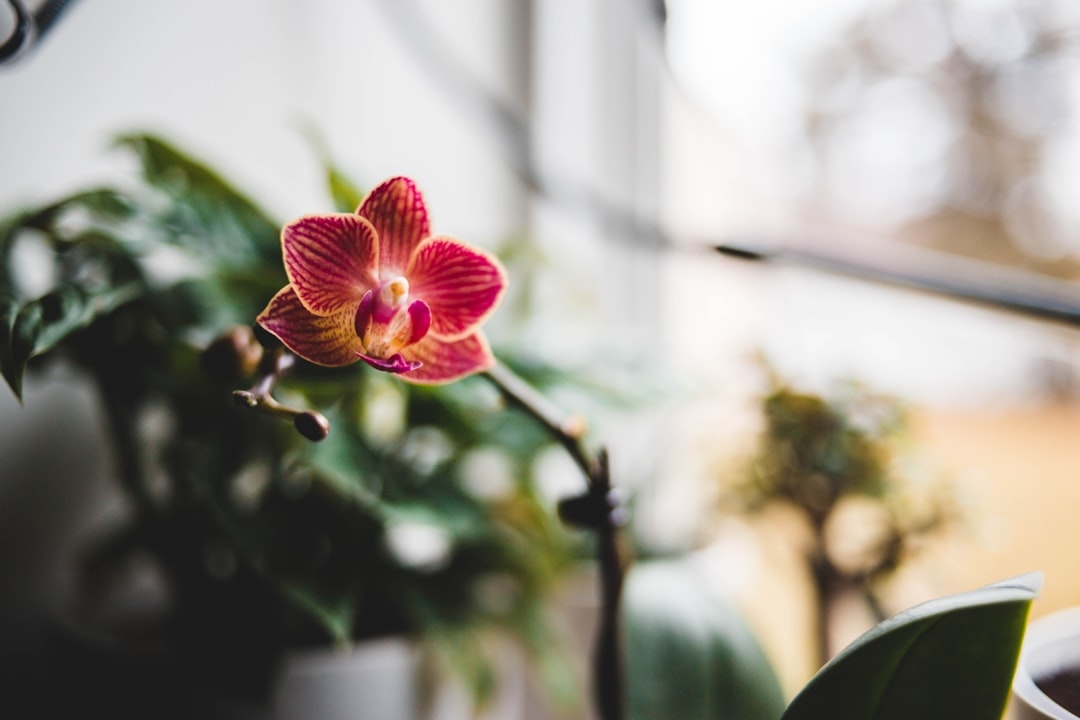
After the flower spike drops its last bloom, don’t throw the plant away. Cut the spike back to just above the second or third node (the small bumps along the stem) — sometimes a secondary spike will branch from there within 8–12 weeks. Alternatively, cut the spike all the way down to the base to redirect energy to root and leaf growth, which typically leads to a stronger bloom in the next cycle.
The single most reliable rebloom trigger: move your orchid to a cooler room — around 55–65°F — for 4–6 weeks in fall. A spare bedroom, a garage that doesn’t freeze, or a cool enclosed porch works well. Once a new spike appears, bring it back to its regular spot and watch it climb.
Common Problems and How to Fix Them Fast
Yellow Leaves
One or two lower leaves yellowing and dropping is completely normal — it’s the plant cycling out old foliage. Multiple yellowing leaves simultaneously usually point to overwatering or too much direct sun. Check the roots first.
Wrinkled or Shriveled Leaves
This signals underwatering or root damage. If the roots look healthy and silver-gray, increase watering frequency. If roots are mushy or absent, the plant can’t uptake water regardless of how much you give it — repot into fresh bark and reduce watering until new roots form.
No New Blooms After 12+ Months
Almost always a light or temperature issue. Increase light exposure and implement the 4–6 week cool-down period described above. If the plant is producing healthy leaves but no spike, it’s getting comfortable but not challenged enough to bloom.
FAQ: Keeping Orchids Alive Indoors
How often should I water an orchid indoors?
Water every 7–10 days in warmer months and every 10–14 days in winter using the soak-and-drain method. Always let the bark dry slightly between waterings. Check root color — silvery-gray means water now, bright green means wait.
Can orchids survive in low-light rooms?
Standard Phalaenopsis orchids struggle without adequate light and will not rebloom in deep shade. Supplement with a full-spectrum LED grow light ($20–$45) placed 12–16 inches above the plant for 14 hours daily to compensate for low natural light.
How do I know if I’m overwatering my orchid?
Check the roots through the clear nursery pot. Brown, black, or mushy roots indicate rot from overwatering. Yellowing leaves that feel soft and the bark staying wet for more than 10–12 days are additional warning signs.
What’s the best fertilizer for indoor orchids?
A balanced 20-20-20 water-soluble fertilizer applied at quarter-strength every other watering works well for most of the year. Switch to a high-phosphorus formula (10-30-20) in late summer to encourage blooming.
Why won’t my orchid rebloom?
The two most common causes are insufficient light and the absence of a nighttime temperature drop. Move the plant to a brighter location and introduce a 4–6 week cool period (55–65°F nights) in fall to trigger a new flower spike.
Your Next Step With Indoor Orchids
The biggest shift in keeping orchids alive indoors isn’t learning a complicated technique — it’s unlearning the instinct to overcare. Water less. Let the roots breathe. Give the plant a cool autumn cue and a bright window. That’s the entire framework. Start with a single Phalaenopsis from your local garden center (expect to pay $12–$25 for a healthy, blooming plant), apply these routines for one full growing cycle, and you’ll have a plant that rewards you with 3–5 months of blooms. Once you see those roots turn green after a proper soak, you’ll understand exactly what your orchid is telling you — and the guesswork disappears entirely.