How to Make a Cheap Bouquet Look Expensive on a Budget
Contents:
- Why Cheap Bouquets Look Cheap
- Cheap Bouquet Look Expensive: The Foliage Formula
- Best Budget Foliage Choices by Region
- Color Strategy: The Monochromatic Upgrade
- Budget-Friendly Blooms with High Visual Impact
- Structural Techniques That Signal Quality
- Wrapping That Elevates Presentation
- Cost Breakdown: What $25 Can Actually Buy
- Frequently Asked Questions
- How do I make a cheap bouquet look expensive for a wedding?
- What flowers look high-end but are actually affordable?
- Does foliage really make that much difference?
- How long will a budget bouquet last if I prep it correctly?
- Where is the cheapest place to buy flowers in bulk?
- Build the Eye Before You Build the Bouquet
You’ve stood in front of a grocery store flower display, done the mental math, and felt the gap between what you can spend and what you actually want. That frustration is common — and it’s solvable. The difference between a $15 bunch that looks sad and a $15 bunch that looks like a florist designed it isn’t the price tag. It’s technique.
Professional floral designers rely on principles borrowed from color theory, plant physiology, and visual proportion. Once you understand the logic, a cheap bouquet look expensive stops being a lucky accident and becomes a repeatable skill.
Why Cheap Bouquets Look Cheap
Most budget bouquets fail for three specific reasons: sparse volume, clashing colors, and neglected stems. A grocery store mixed bouquet typically contains 8–12 stems with minimal foliage — not enough mass to read as luxurious. Visual richness in florals is largely a numbers game. Studies in retail floral display show that perceived value increases significantly when bouquet diameter exceeds 9 inches.
Color clash is the second culprit. Pre-made cheap bouquets often combine 4–6 hues to signal variety, but variety without harmony reads as chaos. Expensive-looking arrangements tend toward tighter palettes — usually 2–3 tones within the same color family.
Finally, stem hygiene. Leaves submerged in water rot within 48 hours, cloud the vase, and signal neglect immediately. Strip every leaf below the waterline. It takes 90 seconds and dramatically upgrades the overall impression.
Cheap Bouquet Look Expensive: The Foliage Formula
Foliage is the fastest, cheapest way to add perceived value. A single bunch of seeded eucalyptus runs $3–$5 at most wholesale-adjacent stores (Trader Joe’s, Costco floral, or local flower markets). Added to a basic carnation bouquet, it introduces texture, fragrance, and the visual softness that signals “someone thought about this.”
Best Budget Foliage Choices by Region
Regional availability shapes your options significantly:
- Northeast: Italian ruscus and variegated pittosporum are reliably available from October through April. Ruscus holds for 2–3 weeks without water, making it ideal for hand-tied arrangements.
- South: Magnolia leaves (often free from your own yard) add dramatic, glossy structure. Lemon leaf, also called salal, is widely available at southern florists for roughly $2 per bunch.
- West Coast: Silver dollar eucalyptus grows wild in many California coastal areas and costs nothing to forage. Myrtle and bay laurel are similarly abundant and fragrant.
- Midwest: Boxwood clippings from landscape shrubs work beautifully as filler. Ask a neighbor — most people trim it anyway.
The goal is to hit a foliage-to-bloom ratio of roughly 40:60. More green than that and the flowers get lost; less and you lose the lushness.
Color Strategy: The Monochromatic Upgrade
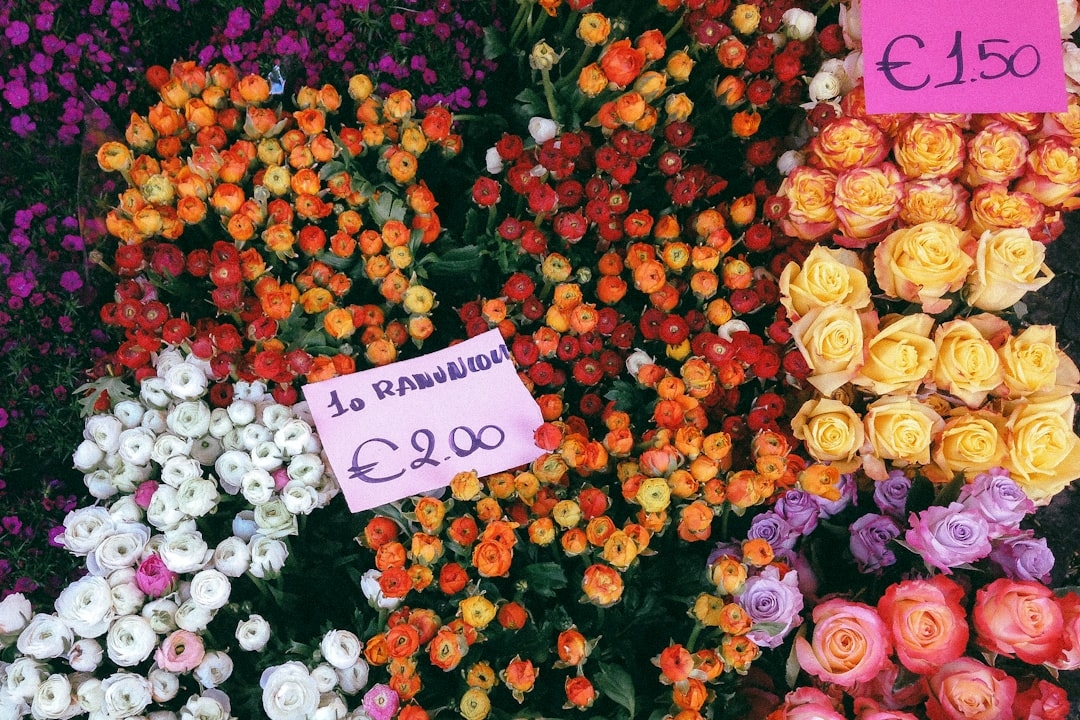
Color is where amateur arrangements diverge most sharply from professional ones. Rather than buying a pre-mixed bouquet, purchase one flower type in 2–3 shades of the same hue. For example: blush, coral, and deep magenta ranunculus. Or white, cream, and champagne roses with pale yellow alstroemeria.
This approach works because tonal variation creates depth without visual noise. It’s the same principle interior designers use when layering throw pillows — same family, different values.
Budget-Friendly Blooms with High Visual Impact
- Carnations: Deeply underrated. Grocery store carnations cost $4–$6 per bunch of 10. Tightly grouped in a monochromatic palette, they photograph almost identically to garden roses.
- Alstroemeria: Each stem branches into 6–8 individual blooms. One $3 stem does the visual work of several single-headed flowers.
- Spray chrysanthemums: Clusters of small flowers add density and last 14+ days — longer than most premium alternatives.
- Lisianthus: Often mistaken for peonies or garden roses at a fraction of the price. Typically $8–$12 per bunch of 5 stems at florist wholesalers.
Structural Techniques That Signal Quality
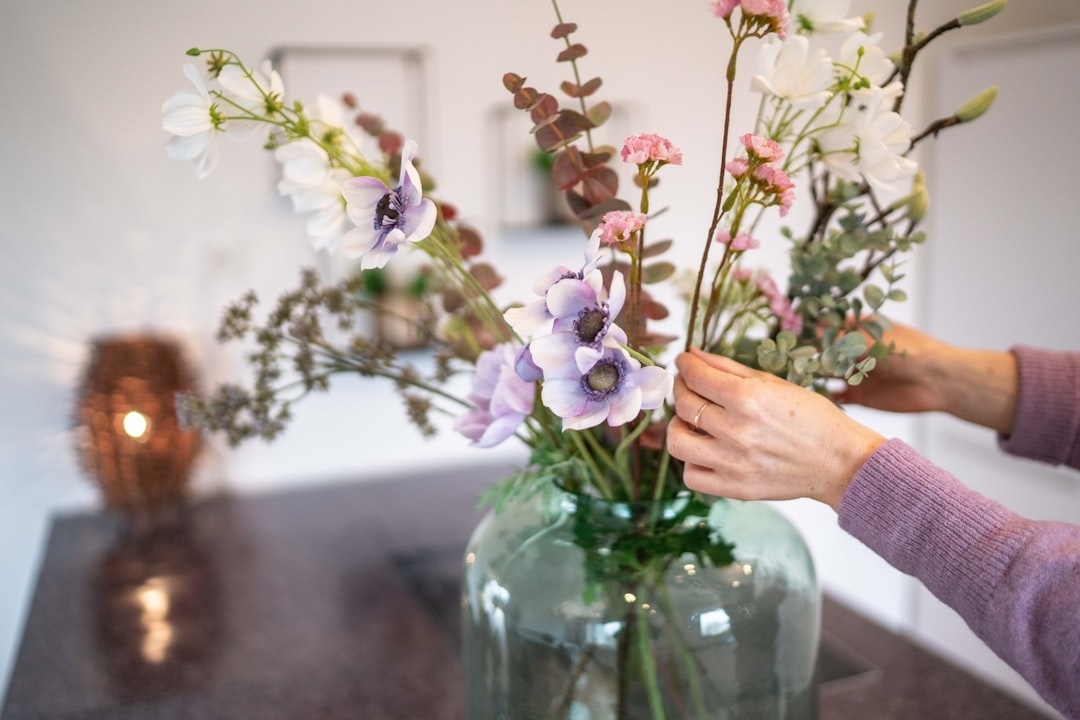
How you build the bouquet matters as much as what goes in it. Use the spiral stem technique: hold the first stem vertically, then add each subsequent stem at a 45-degree angle, rotating the bouquet a quarter turn each time. This creates a dome shape with natural density — the silhouette associated with high-end floristry.
Tie the stems with a rubber band first, then cover it with ribbon or twine. The binding point should sit roughly one-third up from the bottom of the stems. Below that, strip everything clean.
Wrapping That Elevates Presentation
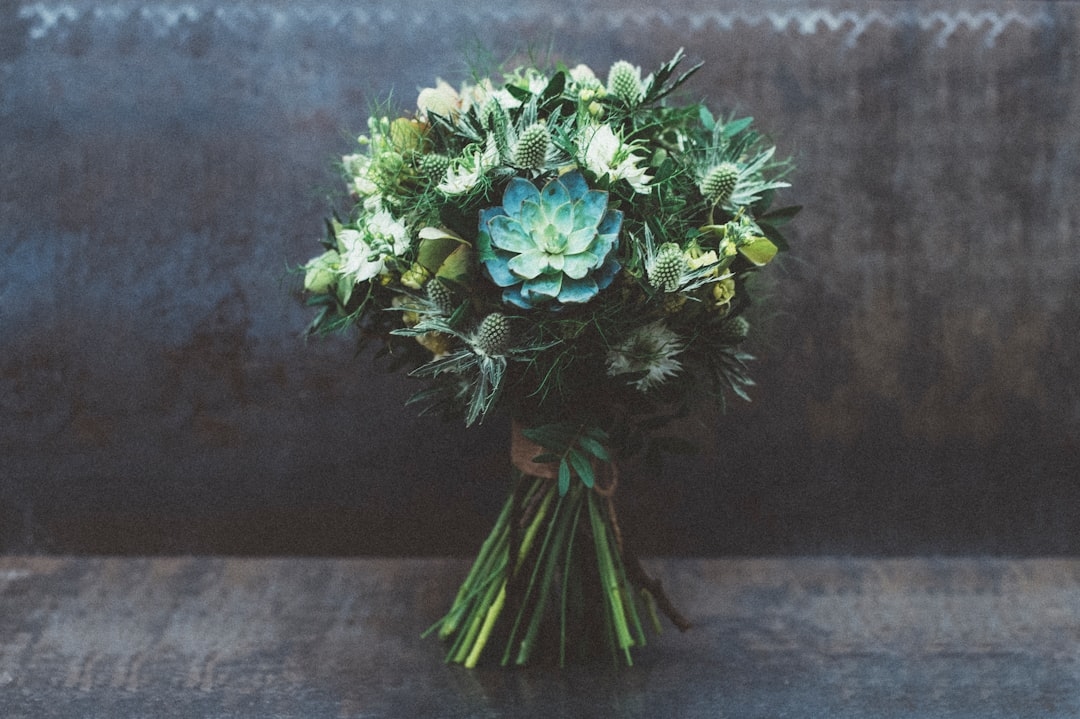
Presentation is the final multiplier. Kraft paper costs less than $5 for a full roll and mimics the aesthetic of artisan flower shops. Fold it asymmetrically — one side higher than the other — rather than straight across. Layer tissue paper underneath for softness. Finish with a linen or jute ribbon rather than synthetic satin; natural textures photograph and feel more premium.
Cost Breakdown: What $25 Can Actually Buy
- 1 bunch alstroemeria (Trader Joe’s): $4.99
- 1 bunch spray carnations, blush: $5.99
- 1 bunch seeded eucalyptus: $3.99
- 3–4 stems lisianthus: $6.00
- Kraft paper (partial roll) + ribbon: $3.50
- Total: ~$24.47
That combination, assembled with spiral technique and monochromatic wrapping, produces a bouquet that retailers would price at $55–$75.
Frequently Asked Questions
How do I make a cheap bouquet look expensive for a wedding?
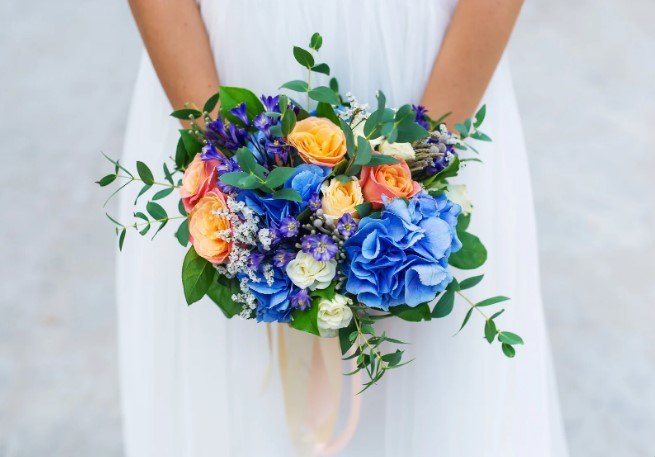
Stick to a strict 2-color palette, use lisianthus as a peony substitute, and add Italian ruscus or dusty miller for texture. Wrap with natural linen ribbon and secure with a pearl-headed pin. DIY bridal bouquets built this way cost $30–$45 versus $120–$200 from a florist.
What flowers look high-end but are actually affordable?
Lisianthus, spray chrysanthemums, alstroemeria, and stock all offer high visual complexity at low per-stem cost. Carnations, when grouped tightly in tone-on-tone arrangements, rival the look of garden roses in photographs.
Does foliage really make that much difference?
Yes — measurably. Foliage adds volume, softens hard edges between blooms, and introduces textural contrast that signals intentional design. A bouquet with foliage looks considered; one without often looks like a fist of flowers.
How long will a budget bouquet last if I prep it correctly?
With properly stripped stems, fresh water changed every 2 days, and placement away from direct sun and ripening fruit (which emits ethylene gas), a well-built budget bouquet lasts 7–12 days. Carnations and chrysanthemums regularly hit the 14-day mark.
Where is the cheapest place to buy flowers in bulk?
Trader Joe’s and Costco floral departments offer the best value for casual buyers. For larger quantities, look for local wholesale flower markets — most allow public access on weekend mornings. Online options like Mayesh Wholesale and Sam’s Club floral run competitive on shipping for orders over $75.
Build the Eye Before You Build the Bouquet
The most reliable upgrade you can make costs nothing: spend 20 minutes studying bouquets you admire. Screenshot them. Notice what they have in common — usually tight color discipline, strong foliage framing, and a clear focal flower. Then reverse-engineer that structure with whatever is affordable and available to you this week.
Floristry rewards observation. The techniques that make a cheap bouquet look expensive are learnable, repeatable, and surprisingly fast once you’ve done them twice. Start with one bunch of eucalyptus and a tight handful of carnations. The logic will do the rest.